
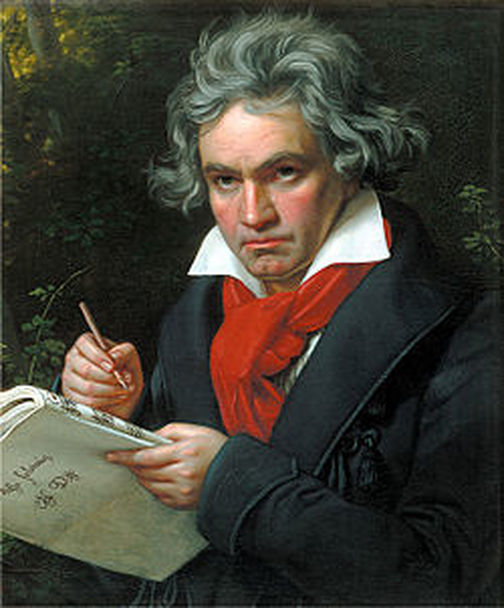

Ludwig van Beethoven / 1770 - 1827
The Amazing Story of the Moonlight Sonata
Ludwig van Beethoven / 1770 - 1827
Who did not have in life moments of extreme pain?
Who has never felt, at some moment in life, the desire to give up?
Who has not yet felt lonely, extremely lonely, and had the sensation of having lost all hope?
Not even famous, rich, important people are exempt from having their
moments of solitude and deep bitterness.
_______________________________________________________________________________
It was exactly what happened with one of the most remarkable composers
of all times, Ludwig Van Beethoven, who was born in 1770, in Bonn,
Germany, and died in Vienna, Austria, in 1827.
Beethoven was going through one of these sorrowful, sombre and gloomy
periods. He was very sad and depressed by the death of a German prince,
who was his benefactor and as a second father to him.
The young composer suffered from a great lack of affection. His father was
a drunkard who used to assault him physically. He died on the streets, due to alcoholism.
His mother died very young. His biological brother never helped him and,
on top of it all, he felt his illness was getting worse. Symptoms of deafness
started to disturb him, leaving him nervous and irritable.
Beethoven could only hear using a kind of horn-shaped trumpet in his ear.
He always carried with him a notebook, where people could write and so
communicate with him. But they did not have patience for this, nor him to read their lips.
Noticing that nobody understood and wanted to help him, Beethoven
withdrew into himself and avoided people. Therefore he earned the fame of
being a misanthrope. For all these reasons the composer fell into deep
depression. He even prepared his will, saying that maybe it was better for him to commit suicide.
But as no child of God is forgotten, the helping hand Beethoven needed
came through a blind young woman who lived in the same boarding house
where he had moved to, and who one night told him, shouting at his ears:
“I would give everything to see the moonlight.”
Listening to her, Beethoven was moved to tears.
After all, he could see! After all, he could compose music and write it in paper!
A strong will to live came back to Beethoven and led him to compose one of
the most beautiful pieces of music of all times: “Mondscheinsonate” – “Moonlight Sonata” .
In its main theme, the melody imitates and resembles the slow steps of
people, possibly of Beethoven himself and others, carrying the coffin of the
German prince, his friend, patron and benefactor.
Looking at the silvery moonlit sky, and remembering the blind young
woman, as asking the reasons for the death of his dear friend, he falls into
deep and profound meditation.
Some music scholars say that the notes that repeat themselves, insistently,
in the main theme of the 1o movement of the Sonata, might be the syllables of
the words “Warum? Warum”? (Why? Why?) or another word in German of similar meaning.
Years after having overcome his sorrow, suffering and pain, came the
incomparable “Ode to Joy” from his “Ninthko Symphony”, Beethoven’s
magnum opus, which crowned the life work of this remarkable composer.
He conducted the first performance himself in 1824, and by then being totally deaf,
failed to hear the applause.
One of the soloists gently turned him around, to see the hall full of a wildly
cheering, applauding, and hat-waving audience. It is said the “Ode to Joy”
expresses Beethoven’s gratitude to life and to God, for not having committed suicide.
And all this thanks to that blind young woman, who inspired in him the
desire to translate, in musical notes, a moonlit night: rays of moonlight
weaving themselves in the sweet strains of a wondrously beautiful melody.
Using his sensibility, Beethoven, the composer who could not hear,
portrayed, through his beautiful melody, the beauty of a night bathed by the
moonlight, for a girl who could not see it with her physical eyes.
Ludwig van Beethoven / 1770 - 1827
Who did not have in life moments of extreme pain?
Who has never felt, at some moment in life, the desire to give up?
Who has not yet felt lonely, extremely lonely, and had the sensation of having lost all hope?
Not even famous, rich, important people are exempt from having their
moments of solitude and deep bitterness.
_______________________________________________________________________________
It was exactly what happened with one of the most remarkable composers
of all times, Ludwig Van Beethoven, who was born in 1770, in Bonn,
Germany, and died in Vienna, Austria, in 1827.
Beethoven was going through one of these sorrowful, sombre and gloomy
periods. He was very sad and depressed by the death of a German prince,
who was his benefactor and as a second father to him.
The young composer suffered from a great lack of affection. His father was
a drunkard who used to assault him physically. He died on the streets, due to alcoholism.
His mother died very young. His biological brother never helped him and,
on top of it all, he felt his illness was getting worse. Symptoms of deafness
started to disturb him, leaving him nervous and irritable.
Beethoven could only hear using a kind of horn-shaped trumpet in his ear.
He always carried with him a notebook, where people could write and so
communicate with him. But they did not have patience for this, nor him to read their lips.
Noticing that nobody understood and wanted to help him, Beethoven
withdrew into himself and avoided people. Therefore he earned the fame of
being a misanthrope. For all these reasons the composer fell into deep
depression. He even prepared his will, saying that maybe it was better for him to commit suicide.
But as no child of God is forgotten, the helping hand Beethoven needed
came through a blind young woman who lived in the same boarding house
where he had moved to, and who one night told him, shouting at his ears:
“I would give everything to see the moonlight.”
Listening to her, Beethoven was moved to tears.
After all, he could see! After all, he could compose music and write it in paper!
A strong will to live came back to Beethoven and led him to compose one of
the most beautiful pieces of music of all times: “Mondscheinsonate” – “Moonlight Sonata” .
In its main theme, the melody imitates and resembles the slow steps of
people, possibly of Beethoven himself and others, carrying the coffin of the
German prince, his friend, patron and benefactor.
Looking at the silvery moonlit sky, and remembering the blind young
woman, as asking the reasons for the death of his dear friend, he falls into
deep and profound meditation.
Some music scholars say that the notes that repeat themselves, insistently,
in the main theme of the 1o movement of the Sonata, might be the syllables of
the words “Warum? Warum”? (Why? Why?) or another word in German of similar meaning.
Years after having overcome his sorrow, suffering and pain, came the
incomparable “Ode to Joy” from his “Ninthko Symphony”, Beethoven’s
magnum opus, which crowned the life work of this remarkable composer.
He conducted the first performance himself in 1824, and by then being totally deaf,
failed to hear the applause.
One of the soloists gently turned him around, to see the hall full of a wildly
cheering, applauding, and hat-waving audience. It is said the “Ode to Joy”
expresses Beethoven’s gratitude to life and to God, for not having committed suicide.
And all this thanks to that blind young woman, who inspired in him the
desire to translate, in musical notes, a moonlit night: rays of moonlight
weaving themselves in the sweet strains of a wondrously beautiful melody.
Using his sensibility, Beethoven, the composer who could not hear,
portrayed, through his beautiful melody, the beauty of a night bathed by the
moonlight, for a girl who could not see it with her physical eyes.
http://www.youtube.com/watch?v=4Tr0otuiQuU
http://www.youtube.com/watch?v=k_UOuSklNL4
http://www.youtube.com/watch?v=k_UOuSklNL4